Why Travel Planning Is Harder Than Ever in 2026
Open any city guide from 2010. It’ll recommend fifteen restaurants, three museums, and a neighbourhood walk. You’ll disagree with some of it. You’ll find it useful.
Now try to plan a city break in 2026.
There’s a subreddit with 400,000 members and 12 years of posts. There’s a Google Maps list with 340 pins from a food blogger who moved to the city three years ago. There’s a TikTok series (thirty-seven videos, each promising “hidden gems”) where every “hidden” restaurant has a queue out the door. There’s an AI trip planner that will generate a fourteen-point itinerary in four seconds, every point sourced from the aggregate of everything above.
The information ecosystem has not made planning easier. In a meaningful sense, it’s made it harder.
The Problem Isn’t Access to Information
The problem is trust.
Every platform has an incentive structure that distorts what it shows you. Google prioritises the optimised (heavily photographed, keyword-rich, review-gamed) over the genuinely good. Instagram rewards photogenic over interesting. TripAdvisor skews towards places with motivated review bases. Listicles are written by people who may never have visited. And AI planners, well intentioned as they are, synthesise all of the above, compressing the distortions rather than resolving them.
The result: a huge volume of recommendations that are hard to trust and impossible to filter without local knowledge you don’t have.

The Influencer Problem
Travel content creators have their place. But the incentive structure of travel content has produced a specific pathology: the permanent novelty cycle.
A place gets discovered and written about. It gets popular. It stops being “authentic” by the standards of the content cycle. New “hidden gems” are needed. New places are discovered. They get popular. The cycle continues.
The practical result for the traveller: by the time a place appears on a popular list, it’s often already past its best moment. You’re chasing a lag indicator.
Local knowledge works differently. A local resident knows which spots are actually good because the locals use them, not because they were written up somewhere. They know which places have slipped (the chef left, the ownership changed) and which have quietly become excellent. This information doesn’t travel through content platforms. It travels through word of mouth.
The AI Planning Paradox
AI trip planners are genuinely useful for some things. Logistics, timing, getting a rough draft of a schedule. Used right, they save time and reduce blank-page paralysis.
But there’s a trap. AI systems trained on the internet reproduce the internet’s biases. They’ll suggest the most-written-about restaurants (not necessarily the best), the most-optimised-for-search neighbourhoods (not necessarily the most interesting), the most-featured-in-guides museums (not necessarily the ones you’d actually enjoy).
More troublingly: they present all of this with equal confidence. The AI can’t distinguish between a place that appears in 200 blog posts because it’s genuinely exceptional and a place that appears in 200 blog posts because it has an aggressive PR team.
What Actually Works
Human curation, filtered by genuine local knowledge, remains the most reliable source. This is why asking a well-travelled friend who’s recently been somewhere still beats any algorithm. Their recommendations come with context, with honest caveats, with the kind of specific detail (“ask for a table upstairs”) that no platform captures.
The problem is scaling that. Most people don’t have the right well-travelled friend for every city.
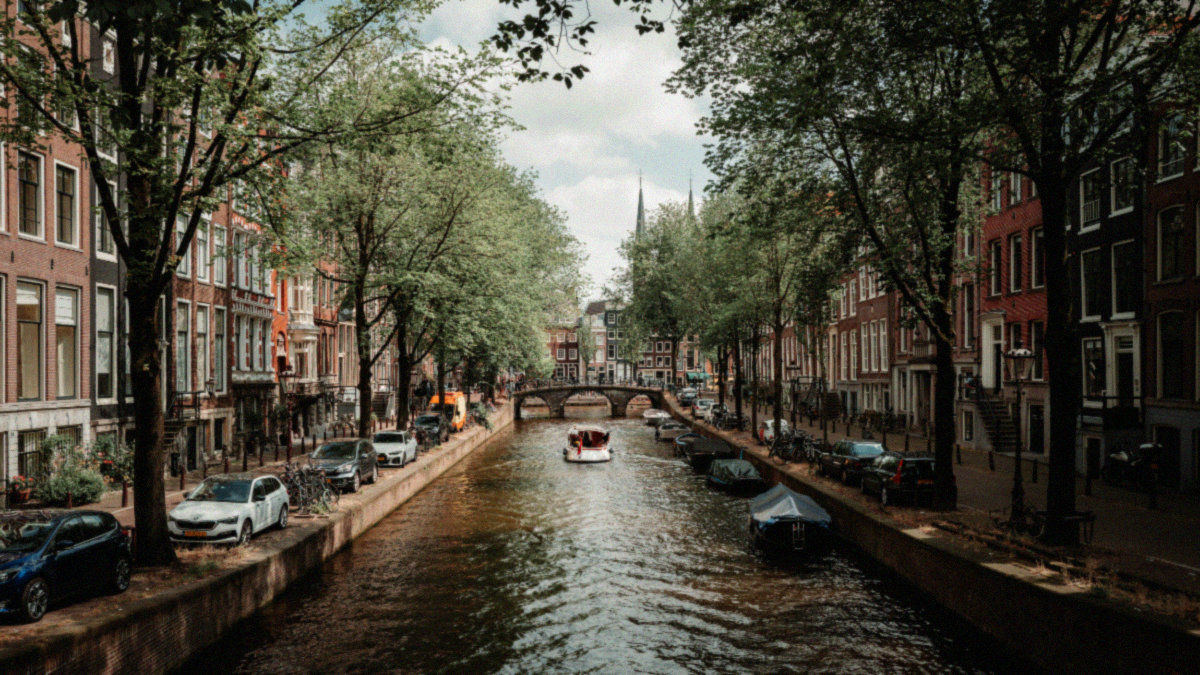
The other thing that works: specificity. Generic recommendations (“great coffee,” “interesting neighbourhood,” “lively atmosphere”) are useless. Specificity is a proxy for genuine knowledge. Anyone can say Amsterdam is good for cycling. Only someone who’s actually spent time there can tell you which canal-side coffee shop has the right combination of window light and decent wifi and isn’t rammed by noon.
Where This Leaves You
Trip planning in 2026 requires, more than at any previous point, knowing which sources to trust and which to treat as noise. The volume of information is not the problem. Distinguishing signal from noise is.
The most reliable travel advice is still the most local. The question is getting access to it.
That’s the problem Sotto is trying to solve. Not AI trip planning, there’s plenty of that, but AI-assisted local expertise: where the technology handles the structure and the local human handles the knowledge. A draft from one, judgement from the other.
If that sounds useful, see how it works.